
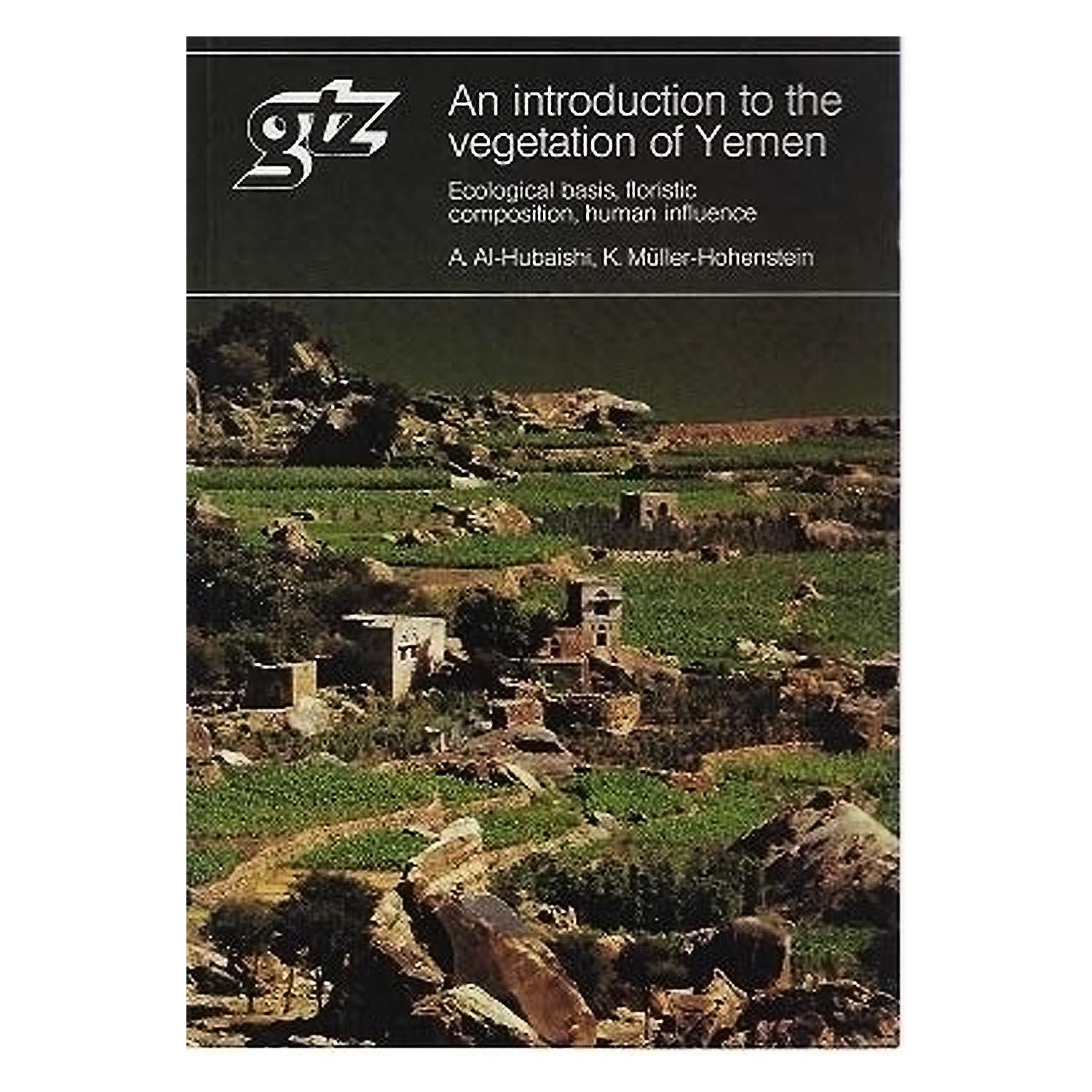
Description
An Introduction to the Vegetation of Yemen
مقدمة الغطاء النباتي اليمني
Yemen’s vegetation is highly diverse, shaped by elevation, climate, and human activity, ranging from coastal drylands to mountainous temperate zones.
Ecological Zones and Plant Distribution
Yemen’s vegetation corresponds closely to its elevation and precipitation patterns, forming three main ecological regions:
Coastal Plains and Wadis: These lowland areas feature dry-climate plants such as date palms, citrus fruits, bananas, and cotton, alongside native species like spurges (Euphorbia), acacia, and tamarisk. The eastern desert wadis support similar flora adapted to arid conditions.
Middle Highlands: This region supports a mix of food crops and woody plants, including melons, nuts, grapes, grains, eucalyptus, sycamore, fig, and carob. The combination of moderate rainfall and fertile soils allows for diverse agricultural and natural vegetation.
Mountainous Interior: The highlands host temperate-zone crops such as coffee and khat (qāt), along with a variety of shrubs and trees. These areas historically retained significant forest cover, although much has been lost due to population pressures and land use changes.
Human Influence
Historically, Yemen had considerable forest cover, but rapid population growth and the demand for fuelwood and agricultural land have drastically reduced forests. By the early 21st century, forested areas were minimal. Human activity has also affected wildlife, with many large mammals and birds now rare or threatened.
Floristic Composition
Yemen’s flora includes a mix of native and cultivated species, reflecting both natural ecological conditions and human agricultural practices. Coastal and desert plants are drought-tolerant, while highland species thrive in cooler, wetter conditions. The country’s plant diversity is also influenced by its location at the intersection of the Afro-Asian and Arabian floristic regions, resulting in unique species assemblages.
Conservation and Ecological Significance
The vegetation of Yemen is critical for soil stabilization, water management, and biodiversity. Traditional practices, such as the use of hima (grazing reserves), historically helped manage plant resources sustainably. Modern conservation efforts focus on protecting remaining forests, preventing desertification, and maintaining the ecological balance in both agricultural and natural landscapes.
Yemen’s vegetation thus represents a complex interplay of climate, topography, and human influence, offering a rich field for ecological study and conservation planning.
Softcover, 1984