

Description
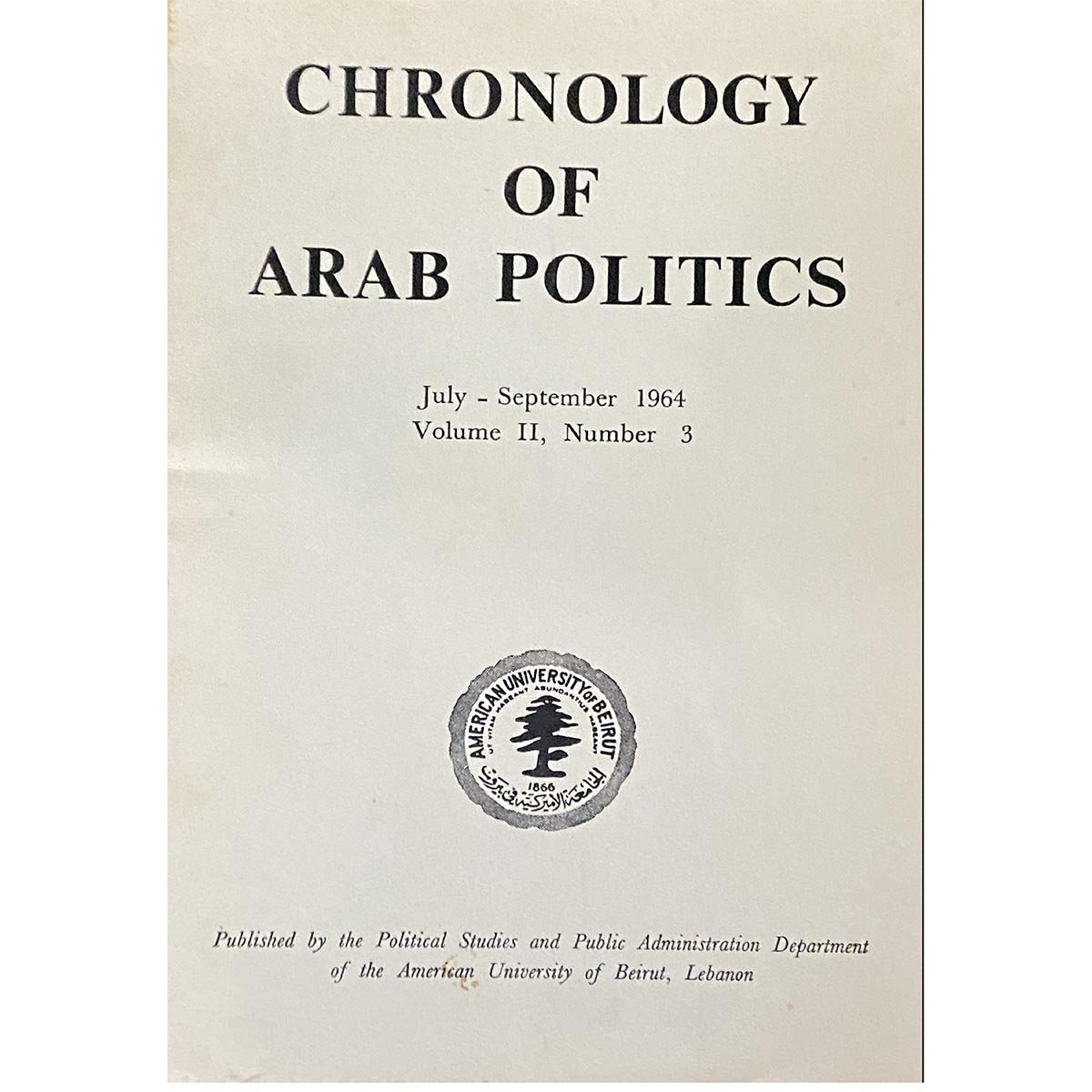
Chronology of Arab Politics July – September 1964
Publication of the American University of Beirut
Published by the Political Science and Public Administration Department of the American University of Beirut
Based on the available historical records, the period of July–September 1964 was marked by the consolidation of the Palestine Liberation Organization (PLO) following its creation in May, culminating in the Second Arab Summit in Alexandria, which formalized unified Arab strategies regarding Palestine and regional tensions.
July 1964
• PLO Consolidation: Following the establishment of the PLO in May 1964, Ahmad al-Shuqairi, the appointed president of the PLO, worked on forming the executive committee and outlining the organization’s structure.
• Arab Diplomatic Activity: Continued discussions among Arab League states regarding the implementation of decisions from the First Arab Summit (January 1964), particularly regarding the Palestinian entity and water diversion projects to counter Israel.
August 1964
• Preparation for Summit: Arab leaders engaged in consultations to prepare for the second summit meeting, focusing on economic cooperation and the military buildup of the United Arab Command.
September 1964 (The Second Arab Summit)
• September 5–11: The Second Arab Summit was held in Alexandria, Egypt.
• Key Decisions:
o PLO Endorsement: The summit officially recognized the Palestine Liberation Organization (PLO) as the representative of the Palestinian people.
o Implementation of Technical Projects: The council reviewed plans to divert the Jordan River tributaries to counter Israeli water projects.
o Military Strengthening: Decisions were made to strengthen the United Arab Command and enhance the defensive capabilities of the Arab states neighboring Israel.
• End of September: Diplomatic follow-up continued on the summit’s commitments, with emphasis on joint efforts for defense.
Key Regional Context (July-Sept 1964)
• Egypt-Jordan Alignment: President Nasser of Egypt and King Hussein of Jordan maintained a precarious cooperation, with Nasir urging King Hussein to co-exist with the newly formed Palestinian resistance (PLO) in Jordan to prevent civil conflict.
• Syria/Iraq: The Ba’ath Party maintained its grip in Syria, while Iraq experienced ongoing political instability.